Shiplog turns PRs, commits, screenshots, and release notes into product stories for each publishing channel, with every claim linked to source material.
Extract durable facts into Project Memory and link them to source materials
Review, accept, or retract facts to keep the project record accurate
Build a brief from selected materials and accepted facts
Generate drafts for each channel — blog posts, release notes, or build logs
Edit, copy, or export the finished content
Key product surfaces
/posts
Publishing workspace for product introductions, updates, and build stories.
/materials
Review source material and manage the facts stored in Project Memory.
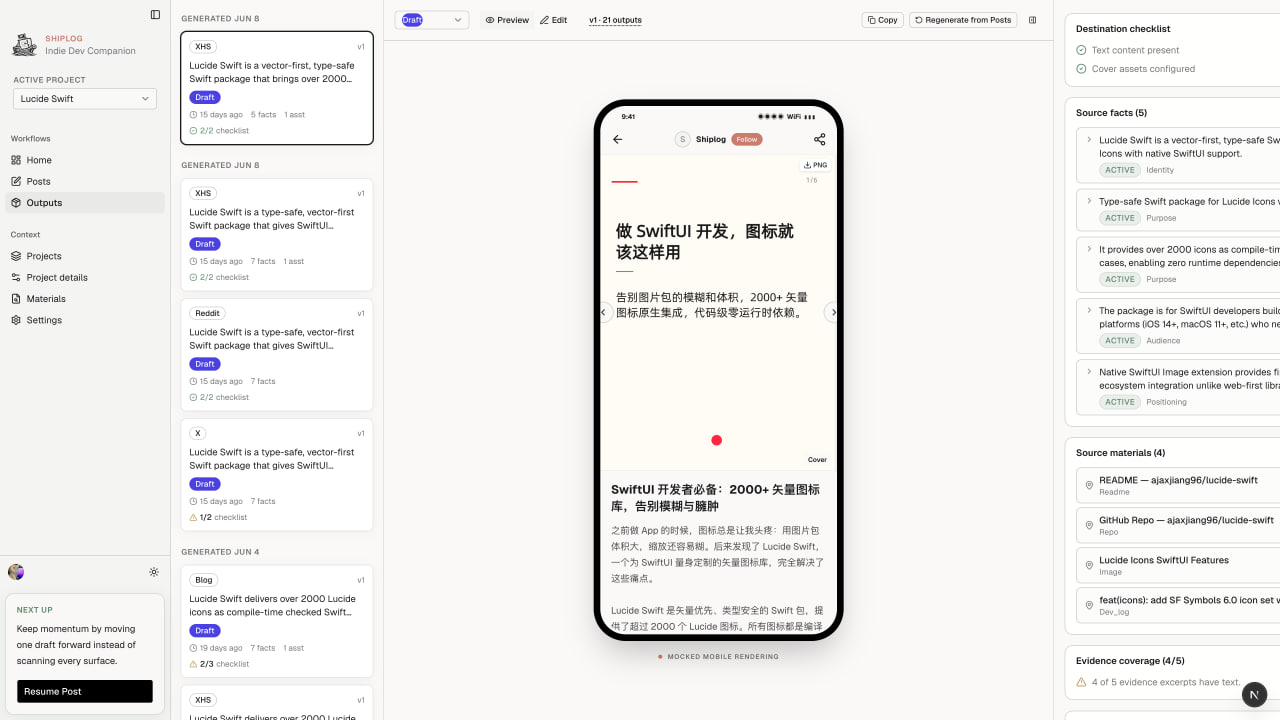
/outputs
Review generated content for each publishing channel.
Visual Renderer
Generate visual exports such as PNG cards and previews.
Narrative Engine
Turn selected material into briefs, plans, and drafts.
Xiaohongshu Carousel
Generate multi-image posts for Xiaohongshu.
Engineering principles
Every fact links to source material through source_material_ids. Missing or corrupted data fails visibly instead of degrading silently. Each output records its provenance so consumers can distinguish canonical data from cached fallbacks.
 Next.js + TypeScript + React 19
 Supabase 1,500+ tests